The Apple AirPods (2nd Generation) are the earbuds that turned true wireless from a novelty into the default. First released in 2019, they refined the original AirPods formula with a faster chip, hands-free Siri, and an optional wireless charging case. Years on, they remain widely sold as Apple’s most affordable open-fit AirPods, and they occupy a specific niche: the simplest possible wireless earbud experience for people already living in the Apple ecosystem.
This is not a review of a cutting-edge product. The AirPods Pro and newer standard AirPods have moved the technology forward with features the 2nd Gen lacks. But the second-generation model still gets recommended for a reason, and understanding exactly what it does and does not offer is the key to deciding whether it is the right buy today.
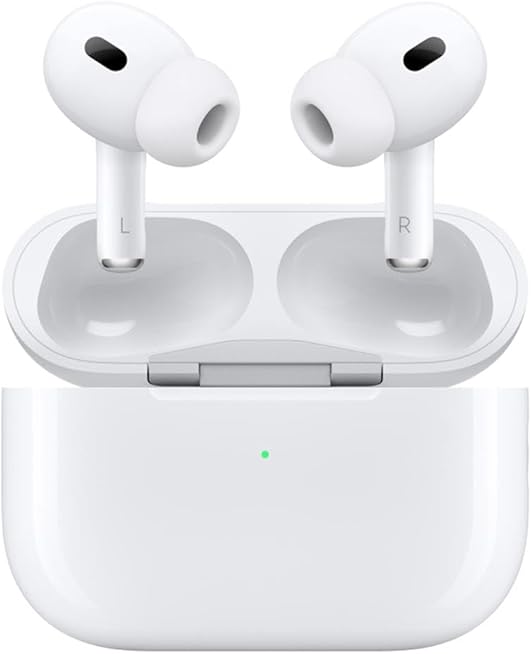
Specifications at a glance
| Feature | Detail |
|---|---|
| Chip | Apple H1 headphone chip |
| Bluetooth | Bluetooth 5.0 |
| Fit | Open (one-size hard-shell, no ear tips) |
| Battery (listening) | Up to 5 hours per charge |
| Battery (talk) | Up to 3 hours per charge |
| Battery (with case) | More than 24 hours listening; up to 18 hours talk |
| Quick charge | 15 minutes in case for up to 3 hours listening |
| Charging | Lightning connector (wireless charging on some case versions) |
| Earbud weight | 4 g each |
| Case weight | 38.2 g |
| Voice | Hands-free “Hey Siri” |
Design, fit, and comfort
The AirPods (2nd Generation) use Apple’s familiar open, one-size hard-plastic design. There are no silicone tips; the earbud simply rests in the outer ear rather than sealing the canal. This is the single most important thing to understand about them, because it shapes everything else. Each earbud weighs about 4 grams and the case adds roughly 38 grams, so the whole package is genuinely pocketable and easy to forget you are carrying.
The open fit has clear trade-offs. On the plus side, it is comfortable for long stretches, does not create the plugged-up pressure some people dislike about sealed in-ear tips, and lets you stay fully aware of your surroundings, which some commuters and office workers prefer. On the downside, fit is not adjustable, so whether the AirPods stay put depends heavily on your ear shape. People whose ears do not hold them securely cannot swap to a different tip to fix it, and the loose fit is a common reason buyers of this generation move to the tipped AirPods Pro instead.
Sound and the open-fit trade-off
Because the AirPods (2nd Generation) do not seal your ear canal, they cannot physically block outside noise, and there is no active noise cancellation to compensate. In a quiet room the sound is clean and balanced in Apple’s usual restrained style, but in noisy environments such as a train, a busy street, or an open-plan office, ambient sound leaks in and competes with the music. Bass in particular depends on a seal, so the low end is lighter than what a sealed in-ear model delivers.
For podcasts, audiobooks, casual playlists, and calls, this is a perfectly pleasant listen. For bass-heavy music at low volume in loud places, it is a compromise. There is also no companion EQ app in the way third-party earbuds offer; the AirPods lean on Apple’s system-level tuning. If isolation and adjustable sound are priorities, this is the wrong model, and Apple’s own tipped options exist precisely to address that.
The H1 chip and Apple ecosystem
The headline upgrade over the original AirPods is the H1 chip. This is where the 2nd Generation earns its keep. On an iPhone, iPad, Mac, or Apple Watch signed into the same Apple account, pairing is nearly instantaneous: open the case near an iPhone and a setup card appears, and the AirPods are then available across your other Apple devices automatically. Switching audio between those devices is handled with minimal fuss, and the H1 also enables hands-free “Hey Siri,” so you can trigger the assistant, change tracks, or ask for directions without touching the buds.
Apple also cites reduced latency from the H1, including lower gaming latency versus the previous chip, which helps keep audio in sync with video and games. This tight, low-friction integration is the core reason to buy these specific earbuds. It is worth stressing the flip side: none of these conveniences apply on Android. The AirPods will connect to an Android phone as ordinary Bluetooth 5.0 earbuds, but you lose the fast pairing, automatic switching, “Hey Siri,” and firmware niceties, which erases most of what makes them special.
Battery and charging
Apple rates the AirPods (2nd Generation) at up to 5 hours of listening or up to 3 hours of talk time on a single charge, with the case bringing the total to more than 24 hours of listening and up to 18 hours of talk. The per-charge figure of 5 hours is modest by today’s standards; several budget rivals now push past that from the buds alone. In practice the small case makes frequent short top-ups painless, and a 15-minute charge in the case yields up to 3 hours of listening, which covers most gaps.
Charging is handled through the Lightning connector rather than USB-C, a reflection of the product’s age. Some versions of this generation shipped with a wireless charging case that works with Qi pads, while others use a standard Lightning-only case, so it is worth checking which case a given listing includes if wireless charging matters to you. Either way, an iPhone owner already carries the right cable.
Pros and cons
Strengths
- Effortless setup and switching across iPhone, iPad, Mac, and Apple Watch via the H1 chip
- Hands-free “Hey Siri” with no button press required
- Very light and pocketable: about 4 g per earbud, 38 g case
- Comfortable open fit that keeps you aware of your surroundings
- Fast charging: 15 minutes for up to 3 hours of listening
Limitations
- No active noise cancellation and no seal, so poor isolation in loud places
- Up to 5 hours per charge is short compared with newer budget rivals
- Lightning charging, not USB-C; wireless charging only on some case versions
- One-size fit is not adjustable and may not stay secure for every ear
- Most smart features are lost on Android
Who it’s for (and who should look elsewhere)
These AirPods are for iPhone owners who want the simplest possible wireless earbuds and value comfort and convenience over isolation and bass. If you dislike the sealed feeling of in-ear tips, want to stay aware of your surroundings, and mostly listen to podcasts, calls, and casual music, the open fit and instant Apple integration are exactly the point.
Look elsewhere if you need noise cancellation, a secure sealed fit for workouts, or long battery life. Within Apple’s range, the AirPods Pro add silicone tips, active noise cancellation, and USB-C, which addresses nearly every weakness here. On Android, or for buyers who simply want more battery for less money, the Soundcore P20i offers a sealed fit, IPX5 sweat resistance, and far longer runtime at a budget price. For a broader look at value options across platforms, our roundup of the best budget wireless earbuds in 2026 compares several alternatives directly.
Frequently asked questions
Do the AirPods (2nd Generation) have noise cancellation?
No. This model has an open fit and no active noise cancellation. It does not seal your ear canal, so it lets in ambient sound. If you want noise cancellation from Apple, you need the AirPods Pro.
Do they charge with USB-C or Lightning?
The 2nd Generation case uses the Lightning connector. Some versions came with a wireless charging case that also works on Qi pads, while others are Lightning-only, so check the specific listing.
How long does the battery last?
Apple rates up to 5 hours of listening per charge, or up to 3 hours of talk time, with the case extending total listening to more than 24 hours. A 15-minute charge provides up to 3 hours of listening.
Are they worth buying if I use Android?
They will pair as basic Bluetooth 5.0 earbuds, but you lose the fast pairing, automatic device switching, and “Hey Siri” that define them. Android users are generally better served by earbuds designed for that platform.
Will they stay in during exercise?
Fit depends on your ear shape because the design is one-size and cannot be adjusted with tips. Many people find the open fit fine for light activity, but for vigorous workouts a sealed, sweat-resistant earbud is a safer choice.
Bottom line
The Apple AirPods (2nd Generation) remain a compelling pick for one specific buyer: the iPhone owner who prioritizes comfort, portability, and frictionless integration over isolation, bass, and battery life. The H1 chip still delivers the seamless setup and hands-free Siri that made AirPods a phenomenon. Just go in clear-eyed about the age-related compromises, an open fit with no ANC, a 5-hour per-charge battery, and Lightning charging, and consider a sealed or newer model if any of those matter to you.