Truly wireless earbuds used to demand a premium price, but that stopped being true a while ago. In 2026 you can spend $25 to $130 and walk away with buds that pair instantly, survive a sweaty workout, and run all day on a pocketable case. The catch is that “budget” now covers a huge range, from $20 impulse buys to Apple’s entry model, and the trade-offs between them are real. This guide focuses on two picks we cover in depth on the site, then puts them in context alongside a couple of well-known alternatives so you can match a set to how you actually listen.
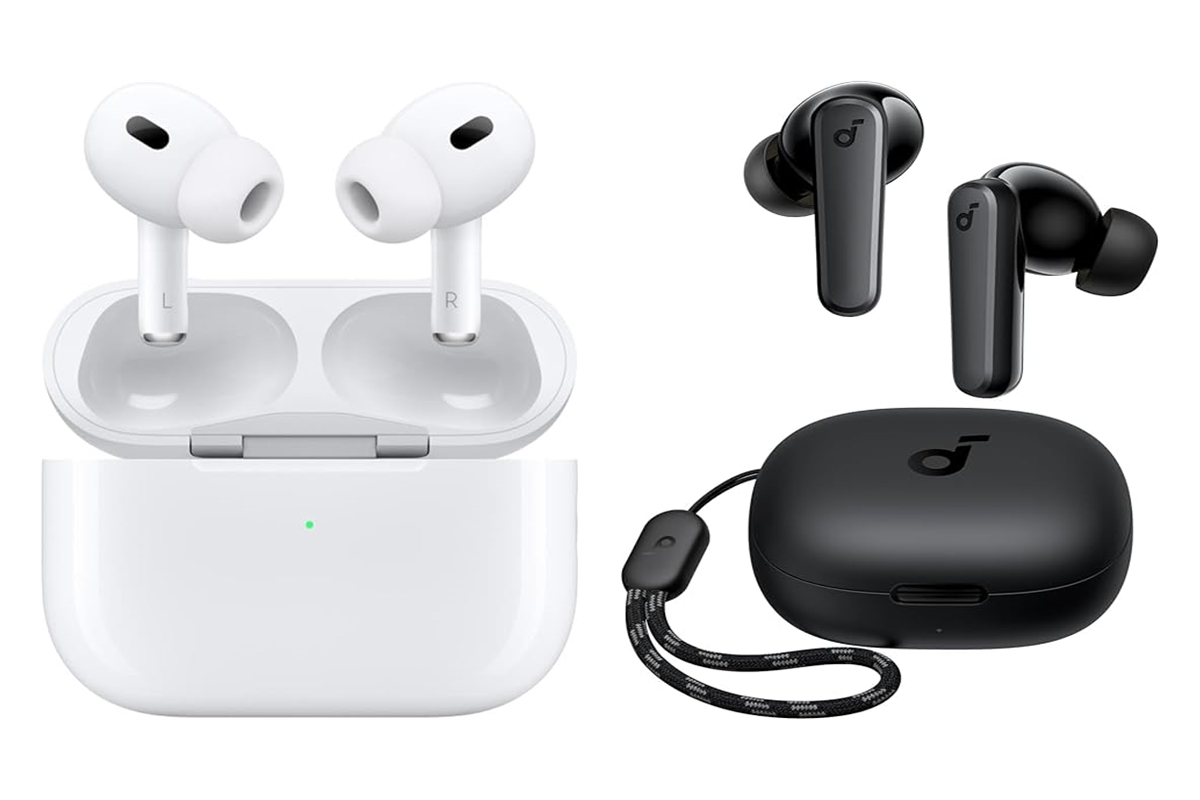
Our anchor picks are the Soundcore P20i, a rock-bottom-priced all-rounder from Anker’s audio brand, and the Apple AirPods (2nd generation), the cheapest way into Apple’s ecosystem. They sit at opposite ends of the budget bracket and suit very different buyers, which is exactly why they make a useful pair to compare.
How we chose these earbuds
This is an editorial roundup built from manufacturer specifications, published product information, and category research rather than hands-on lab testing. We weighted the factors that matter most to budget buyers: verified battery life (buds plus case), Bluetooth version and stability, water resistance for gym and commute use, whether there’s an app for EQ and control customization, and fit style. We also gave credit for the small things that make cheap earbuds livable day to day, like quick-charge support and reliable auto-pairing.
Price bracket matters too. Everything here is genuinely affordable, but “budget” spans a wide band. The Soundcore P20i lives at the very bottom of it; the AirPods 2nd generation is the priciest pick and earns its place mainly through ecosystem convenience rather than raw features. We flag which is which so you’re not paying for something you won’t use.
Budget earbuds compared at a glance
| Model | Bluetooth | Battery (buds / with case) | Water resistance | App & EQ | Best for |
|---|---|---|---|---|---|
| Soundcore P20i | 5.3 | 10 h / 30 h | IPX5 | Yes, 22 EQ presets | Lowest price, workouts |
| Apple AirPods (2nd gen) | 5.0 | 5 h / 24 h+ | None | No dedicated EQ app | iPhone owners |
| JLab Go Air Pop | 5.1 | 8 h / 32 h | IPX4 | 3 on-bud EQ modes | Absolute cheapest |
| EarFun Air | 5.x | ~7 h / ~35 h | IPX7 | Yes | Wireless charging on a budget |
Soundcore P20i — the value benchmark
The Soundcore P20i is the pick to beat if your only rule is “spend as little as possible without buying junk.” On paper it punches well above its price. Anker fits oversized 10 mm dynamic drivers tuned for boosted bass, and the total battery figure is the headline: up to 10 hours from the buds themselves and 30 hours including the charging case, according to the manufacturer. A 10-minute quick charge is rated to add around 2 hours of playtime, which covers the “I forgot to charge these” mornings.
Connectivity is current-generation Bluetooth 5.3, and the buds carry an IPX5 rating, meaning they’re built to shrug off sweat and light rain, so gym and commute use is fair game. The often-overlooked strength here is software: the free soundcore app unlocks 22 EQ presets plus custom control mapping, which is unusual at this price. There are two mics per side with an AI algorithm aimed at clearer calls, and a lanyard loop on the case for clipping to a bag.
For the full breakdown of tuning, fit, and app behavior, see our dedicated Soundcore P20i review. The short version: this is the most earbud you can get for the money, best for anyone who wants long battery, water resistance, and EQ control without spending much at all.
Apple AirPods (2nd generation) — the easy iPhone choice
The Apple AirPods (2nd generation) are the oldest design in this roundup, and they’re still here for one reason: nothing pairs with an iPhone as painlessly. Powered by Apple’s H1 chip, they connect the instant you flip the case open near an Apple device, sync across your iCloud devices automatically, and respond to “Hey Siri” hands-free. Battery life is more modest than the P20i’s, rated at up to 5 hours of listening per charge and more than 24 hours total with the case; a 15-minute top-up is rated for about 3 hours of listening.
Be clear about what you’re not getting. These use Bluetooth 5.0, they have no active noise cancellation, and they carry no official water-resistance rating, so they’re a poor match for hard workouts. The fit is the classic hard-plastic open design that either suits your ears or doesn’t, with no ear tips to swap. The standard case charges over Lightning; the Qi wireless charging case is a pricier variant.
Our full Apple AirPods 2nd generation review digs into who should buy these versus stepping up to a newer AirPods model. If you own an iPhone and value zero-friction pairing and Siri over battery life, sound customization, or sweat resistance, they remain the simplest entry point.
Two alternatives worth knowing
If your budget is even tighter than the P20i’s, the JLab Go Air Pop is the perennial floor of this category. It offers Bluetooth 5.1, an IPX4 sweat rating, three on-bud EQ modes, and around 8 hours per charge for roughly 32 hours with the case, typically for about $20. Controls and mic quality are basic, but as a first pair or a knockabout backup set, it’s hard to argue with.
A step up in features, the EarFun Air adds things the others skip at this price: an IPX7 water rating, Qi wireless charging, a four-mic array, and total battery in the mid-30-hour range. It costs more than the P20i but less than the AirPods, and it’s a smart pick if wireless charging or a higher waterproof rating is on your must-have list. If you’d rather have a small portable speaker for shared listening, our audio coverage also includes the JBL Clip 5 and the JBL Go 4, and the Anker Soundcore 2 for bigger sound at home.
How to choose budget wireless earbuds
Start with your phone. If you’re on iPhone and never plan to leave, AirPods’ seamless pairing and Find My integration are genuinely convenient. If you’re on Android or you don’t care about ecosystem tricks, an app-driven pair like the P20i or EarFun gives you more control for less money.
Match water resistance to your use. IPX4 handles light sweat; IPX5 adds resistance to water jets; IPX7 means the buds can survive brief submersion. For running and the gym, treat an IPX4 rating as the minimum and don’t rely on any earbud without a stated rating near serious moisture.
Read the battery number carefully. Marketing leads with the combined buds-plus-case total (30 to 35 hours is common), but the figure that governs a single listening session is the per-charge rating of the buds alone. That ranges from about 5 hours (AirPods) to 10 hours (P20i) here, which is a real day-to-day difference.
Value the app. A companion app that offers EQ presets and remappable controls can transform how a cheap pair sounds and feels. The P20i and EarFun have one; the JLab keeps EQ on the buds; the AirPods 2nd gen lean on iOS rather than a tuning app.
Consider fit style before sound. The single biggest driver of whether cheap earbuds sound good is the seal. Silicone-tip designs like the P20i, JLab, and EarFun form a seal in the ear canal, which improves bass and passively blocks some outside noise, and they let you swap tip sizes to dial in comfort. The AirPods’ open, one-size hard-plastic shape sits in the ear rather than sealing it, so bass is lighter and noise leaks in, but some people find that shape more comfortable for long stretches and less isolating when they want to hear their surroundings. Neither approach is “better” in the abstract; it depends on your ears and where you listen.
Frequently asked questions
Are budget wireless earbuds good enough for everyday use?
Yes. The gap between budget and premium earbuds in 2026 is mostly in active noise cancellation, spatial audio, and premium build. For calls, podcasts, commuting, and workouts, a well-specced pair like the Soundcore P20i covers the essentials, including all-day battery and IPX5 water resistance.
Do the AirPods 2nd generation have noise cancellation?
No. Active noise cancellation is reserved for the AirPods Pro line. The 2nd generation AirPods are an open-fit design with no ANC and no official water-resistance rating, so they don’t seal out noise or handle heavy sweat.
Which of these lasts longest on a charge?
Among our picks, the Soundcore P20i leads with a rated 10 hours per charge and 30 hours including the case. The AirPods 2nd generation are rated for up to 5 hours per charge and more than 24 hours total, while the JLab Go Air Pop lands around 8 hours per charge.
Can I use budget earbuds for phone calls?
Yes, and most now use multiple microphones with noise-reduction processing. The P20i uses two mics per side with an AI call algorithm, and the EarFun Air uses a four-mic array. Call clarity in wind and noise is where cheaper sets show their limits, but for indoor and everyday calls they’re fine.
Do these work with both Android and iPhone?
All of them use standard Bluetooth and will pair with any phone. The AirPods technically connect to Android but lose their signature features, such as instant pairing and iCloud syncing, so they only make sense for Apple users. The P20i, JLab, and EarFun are platform-agnostic.
The bottom line
For most buyers, the Soundcore P20i is the smart-money pick in this roundup: it delivers longer battery, IPX5 water resistance, and full app-based EQ for a fraction of the cost of the alternatives. The Apple AirPods (2nd generation) justify their higher price only if you live on an iPhone and prize effortless pairing above features. If you’re chasing the absolute lowest price, the JLab Go Air Pop is a safe floor, and the EarFun Air is the one to eye if wireless charging matters. Read the individual reviews linked above to confirm the pick that fits your ears and your phone. For a companion device on the entertainment side, see our guide to the best streaming devices for home entertainment in 2026.